
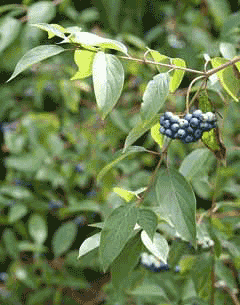
Silky Dogwood
Latin Name: Cornus amomum
USDA Hardiness: 4-8
Native Range: NORTHERN AMERICA: Canada (Québec, Ontario), United States (Connecticut, Indiana, Maine, Massachusetts, Michigan, New Hampshire, New Jersey, New York, Ohio, Pennsylvania, Rhode Island, Vermont, West Virginia, Iowa, Missouri, Illinois, Oklahoma, Alabama, Arkansas, Delaware, District of Columbia, Florida, Georgia, Kentucky, Mississippi, North Carolina, South Carolina, Tennessee, Virginia)
Edibility Rating: 1 / 5
Medicinal Rating: 2 / 5
Region:
Family:
Plant Type:
Medicinal Uses
Edible Uses
Edible Parts: Fruit | Edible Uses: Fruit - raw or cooked[105, 161, 177]. Said to be very good to eat[2]. The fruit is 8mm in diameter[235].
Cultivation
Landscape Uses:Border, Massing, Specimen, Woodland garden. An easily grown plant that thrives in Britain, it succeeds in any soil of good or moderate fertility[1], ranging from acid to shallow chalk[200]. Grows well in heavy clay soils. Succeeds in full sun or light shade[188]. Plants in this genus are notably resistant to honey fungus[200]. Special Features: Attracts birds, Attractive foliage, Not North American native, Naturalizing, Wetlands plant, Attracts butterflies, Attractive flowers or blooms.
Known Hazards
None known
Habitats
Swamps and damp thickets[43]. Low woods and along the sides of streams[235].