
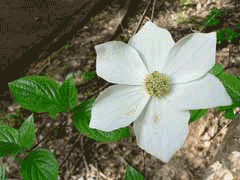
Mountain Dogwood, Pacific dogwood, Western Dogwood
Latin Name: Cornus nuttallii
USDA Hardiness: 6-8
Native Range: NORTHERN AMERICA: Canada (British Columbia), United States (Idaho, Oregon, Washington, California)
Edibility Rating: 1 / 5
Medicinal Rating: 2 / 5
Region:
Family:
Plant Type:
Medicinal Uses
Edible Uses
Edible Parts: Fruit | Edible Uses: The fruit is possibly edible[177]. The fruit is about 10mm in diameter[200] and has a thin, mealy flesh[82].
Cultivation
Landscape Uses:Border, Specimen, Woodland garden. An easily grown plant, it succeeds in any soil of good or moderate fertility[1], ranging from acid to shallow chalk[200]. Another report says that it does not thrive in poor chalky soils[182]. Grows well in heavy clay soils. Succeeds in full sun or light shade[[188]. Plants are hardy to about -15°c[184], but they require long hot humid summers in order to promote good growth[200]. A very ornamental tree[1], but it is usually short-lived in Britain and does not do well in the north of this country[11]. There is some evidence to suggest that trees grow better on poor soils and can be killed by too much kindness. A very good tree has been seen on a poor gravel soil[182]. Closely related to C. florida[226]. This species is the floral emblem of British Columbia[226]. A number of named varieties have been developed for their ornamental value[182]. Plants in this genus are notably resistant to honey fungus[200]. Special Features:Attracts birds, North American native, Blooms are very showy.
Known Hazards
None known
Habitats
Usually found in moist well-drained soils in the shade of coniferous trees to 1800 metres[82].