
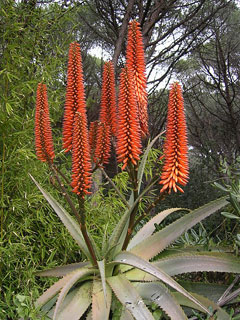
Aloe Vera, Barbados aloe, First Aid Plant, Medicinal Aloe
Latin Name: Aloe vera
USDA Hardiness: 9-11
Native Range: AFRICA: Spain (Canarias)
Edibility Rating: 1 / 5
Medicinal Rating: 5 / 5
Region:
Family:
Plant Type:
Medicinal Uses
Edible Uses
Edible Parts: Leaves Seed | Edible Uses: Leaves - cooked[105]. Very bitter, they are an emergency food that is only used when all else fails[177]. A gel in the leaves is sometimes used as an ingredient of commercial jellies[183]. Seed[105, 183]. An emergency food used when all else fails[177]. It is very unlikely that the seed will be produced in Britain[238].
Cultivation
Landscape Uses: Container, Ground cover, Rock garden. Requires well-drained soil and a very sunny position[1]. Plants are tolerant of poor soils[200]. If trying to grow this plant outdoors, it will need the sunniest and warmest area in the garden and some protection from winter cold (perhaps a glass frame)[K]. This species is not very cold-hardy outdoors in Britain, it is best grown in a pot placed outdoors in the summer and put in a greenhouse for the winter[1]. It grows very well in a sunny windowsill[K]. Special Features: Attractive foliage, North American native, naturalizing blooms appear periodically throughout the year, and attractive flowers or blooms. In garden design, as well as the above-ground architecture of a plant, root structure considerations help in choosing plants that work together for their optimal soil requirements, including nutrients and water. The root pattern is rhizomatous, with underground stems sending roots and shoots along their length [2-1]. Aloe species are not self-fertile and often require cross-pollination with other plants for successful seed production. Aloe leaves can be harvested year-round, but mature leaves are generally harvested in late spring to summer when the plant is most vigorous for specific products like aloe vera gel. Aloe species typically flower in late winter to early spring, depending on the species and local climate conditions. Growth rates can vary among species, but generally, aloe plants are considered moderate to slow growers, with many species taking several years to reach maturity.
Known Hazards
Taken by mouth may cause cramping pain in the gastrointestinal tract and diarrhoea (reduce dose). Skin rashes with long term use of gel. Rare adverse effects are on heart rhythm, kidney damage and oedema. Long term use can cause electrolytes loss esp. potassium and may therefore enhance the effect of drugs that act on the heart (e.g. digoxin) [301].
Habitats
Maritime sands and rocks[50].