
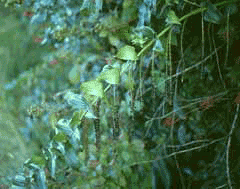
Latin Name: Coriaria ruscifolia
USDA Hardiness: 7-10
Native Range: NORTHERN AMERICA: Mexico (Durango, San Luis Potosí, Sinaloa, Chiapas, Colima, Guerrero, Jalisco, México, Michoacán de Ocampo, Morelos, Nayarit, Oaxaca, Puebla) SOUTHERN AMERICA: Guatemala, Panama, Venezuela, Colombia, Ecuador, Peru, Argentina, Chile
Edibility Rating: 2 / 5
Medicinal Rating: 0 / 5
Region:
Family:
Plant Type:
Medicinal Uses
Edible Uses
Edible Parts: Fruit | Edible Uses: Fruit - raw or used as a beverage[11, 46, 61, 105, 153]. The pressed fruit yields a very palatable juice, which is drunk raw or fermented into wine[2]. Use with great caution since most parts of the plant, including the seed[173], are very toxic and some reports suggest the fruit should not be used at all[11].
Cultivation
Prefers a fairly good loamy soil in a sunny sheltered position[11, 164, 200. Succeeds in light shade[200]. This species is not very hardy in Britain, it tolerates temperatures down to about -5°c and succeeds outdoors from Sussex and westwards[200]. There is some confusion over the name of this species, some botanists unite this species with the New Zealand C. sarmentosa whilst others maintain that they are distinct[11, 200]. The roots of plants in this genus bear nitrogen-fixing nodules[218]. Whilst much of the nitrogen will be utilized by the growing plant, some of it will become available for other plants growing nearby[K].
Known Hazards
All parts of the plant, except the 'fruit' (actually the petals) are highly poisonous[61, 153, 173].
Habitats
Not known