
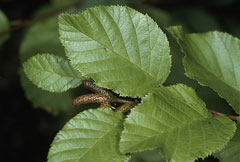
American Green Alder
Latin Name: Alnus viridis crispa
USDA Hardiness: 4-8
Native Range: Coming Soon
Edibility Rating: 1 / 5
Medicinal Rating: 2 / 5
Region:
Family:
Plant Type:
Medicinal Uses
Edible Uses
Edible Parts: Flowers | Edible Uses: Catkins - raw or cooked. A bitter taste[172].
Cultivation
Prefers a heavy soil and a damp situation[1, 11]. Grows well in heavy clay soils. A useful plant for cold damp places[11]. Tolerates lime and very infertile sites[11, 200]. This species has a symbiotic relationship with certain soil micro-organisms, these form nodules on the roots of the plants and fix atmospheric nitrogen. Some of this nitrogen is utilized by the growing plant but some can also be used by other plants growing nearby[200]. In garden design, as well as the above-ground architecture of a plant, root structure considerations help in choosing plants that work together for their optimal soil requirements including nutrients and water. The root pattern is branching: a heart root, dividing from the crown into several primary roots going down and out [2-1].
Known Hazards
None known
Habitats
Rocky shores, slopes and mountains[43]. Singly or in thickets along streams, lakeshores, coasts, and bog or muskeg margins, or on sandy or gravelly slopes or flats, from sea level to 2000 metres[270].