
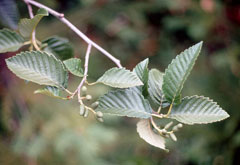
Mountain Alder, Thinleaf alder
Latin Name: Alnus tenuifolia
USDA Hardiness: 5-7
Native Range: NORTHERN AMERICA: Canada (Northwest Territories (west), Yukon, Saskatchewan (north), Alberta, British Columbia), United States (Alaska, Colorado, Idaho, Montana (west), Oregon, Washington, Wyoming (s. & w.), New Mexico (north), Arizona, California (north), Nevada (north), Utah)
Edibility Rating: 1 / 5
Medicinal Rating: 2 / 5
Region:
Family:
Plant Type:
Medicinal Uses
Edible Uses
Edible Parts: Flowers | Edible Uses: Catkins - raw or cooked. A bitter taste[172].
Cultivation
Landscape Uses: Erosion control. Prefers a heavy soil and a damp situation[1, 11]. Grows well in heavy clay soils[11]. Tolerates very infertile sites[200]. A fast-growing but short-lived tree[229]. There is some confusion over the correct name of this tree with one authority citing the European species A. incana as the correct name[60]. Another report says that this species is closely related to A. incana, but distinct[229]. Some modern works treat it as a subspecies (Alnus incana tenuifolia). This species has a symbiotic relationship with certain soil micro-organisms, these form nodules on the roots of the plants and fix atmospheric nitrogen. Some of this nitrogen is utilized by the growing plant but some can also be used by other plants growing nearby[200]. Special Features:Not North American native, Wetlands plant, Inconspicuous flowers or blooms. In garden design, as well as the above-ground architecture of a plant, root structure considerations help in choosing plants that work together for their optimal soil requirements including nutrients and water. The root pattern is branching: a heart root, dividing from the crown into several primary roots going down and out [2-1].
Known Hazards
The freshly harvested inner bark is emetic but is alright once it has been dried[172].
Habitats
Moist soils by swamps, streams, ponds and lakes in foothills to well up in the mountains[60, 229].